BPC-157 cytoprotection began with a stomach
Protection sounds reassuring. The experiments become much more interesting when the injury, the tissue and the animal remain in the sentence.
Cytoprotection meaning
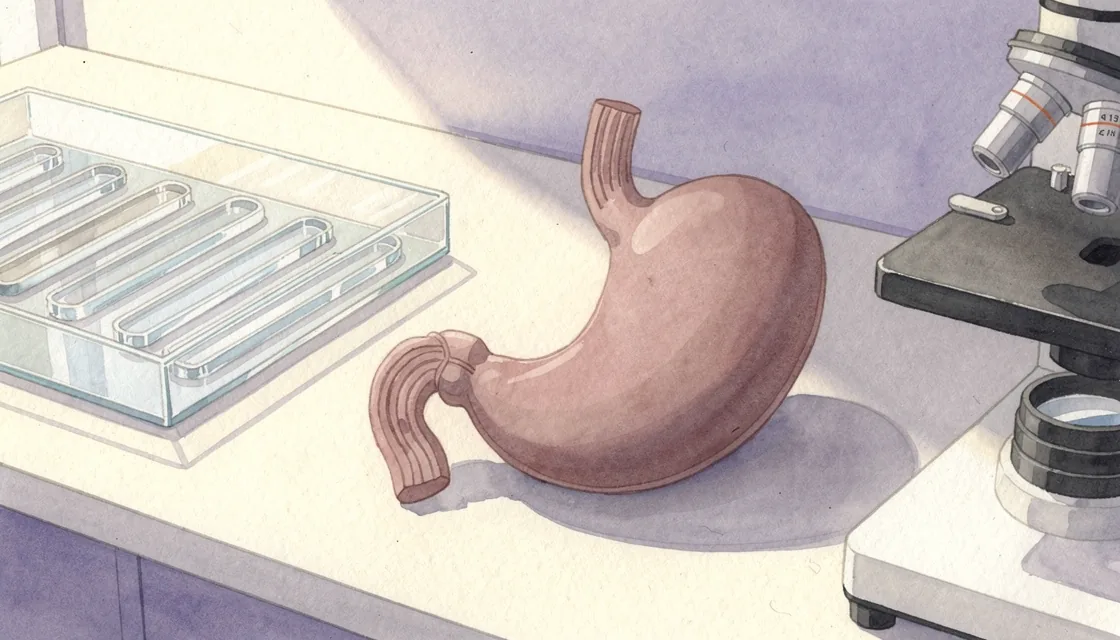
Cytoprotection means protection of cells and tissues from injury. In the BPC-157 record, the word describes protection against identifiable experimental damage; a general promise of resilience goes beyond those findings. The gastric-ulcer study tested BPC-157 in Wistar rats, reporting smaller ulcers and faster rebuilding of the stomach lining.
At the higher study doses, the ulcer-formation inhibition ratio was 45.7-65.6%. The doses were 400 ng/kg and 800 ng/kg; delivery into muscle outperformed delivery into the stomach. These are the paper's rat figures.
The route result upsets the obvious story about a gastric origin. A peptide with a gastric origin and reported gastric stability did better by the muscle route in this experiment. Its origin gives me a starting point for asking how it behaves.
Diclofenac injury reached beyond the gut
Diclofenac is an NSAID, a medicine used for pain and inflammation. In the 2011 rat toxicity model, BPC-157 reduced diclofenac-induced gastrointestinal, liver and brain lesions. The 2013 review gathers the rodent NSAID-counteraction findings across organs.
That is a more surprising claim than faster closure of a wound: protection from damage caused by another drug. It is why this corner of the literature deserves its own page. It is also why I resist turning the word counteraction into permission to combine medicines. Neither the rat experiment nor the review established a safe human pairing.
A phrase such as cytoprotective therapy can sound as though the clinical step has already happened. Here it describes the research ambition. No human trial in the cited record demonstrates protection against diclofenac toxicity.
A possible connection through blood vessels
The vascular study found increased vessel density and faster recovery of blood flow in rat muscle. The angiogenesis and nitric-oxide review places vascular responses at the centre of the preclinical explanation. Nitric oxide helps regulate vessel tone, so blood supply offers a possible connection between findings in quite different tissues.
The cross-organ explanation tempts me. That attraction leaves its truth untested. The models differ, and limited replication and very small human studies remain obstacles to a clinical conclusion.
Can BPC-157 protect against drug or toxin damage?
The cited evidence supports a narrower answer: less diclofenac-induced organ damage in rats. It does not establish human protection against a drug or poison, nor a human interaction rule.
My curiosity now rests on whether the result survives a new experiment without expanding its scope. For the questions that arise when a person already has liver damage or kidney disease, the FAQ returns to the actual human subjects. The legal-status page handles the separate question of prescription care and pharmacy ingredients.